
Rising electricity tariffs, recurring power cuts, and the push toward clean energy leave many property owners wondering whether standard rooftop solar goes far enough. While grid-tied arrays reduce daytime electricity costs, they automatically shut down the moment the local power grid fails. That limitation is driving thousands of homeowners to ask a crucial question: are hybrid solar systems for homes worth it?
Investing in a hybrid solar system is not just about reducing your utility bills; it is about establishing a self-sustaining micro-power plant on your roof that guarantees continuous electricity day, night, and through unexpected blackouts.
TABLE OF CONTENT
- What Exactly Is a Hybrid Solar System
- Why Hybrid Solar Systems Deliver Superior Value
- Comparing Your Options: On-Grid vs Off-Grid vs Hybrid
- The Financial Return on Investment
- Core Components That Guarantee System Longevity
- The Final Verdict on Going Hybrid
- Build Your Resilient Energy System with Mahati Enterprises
- Frequently Asked Questions
What Exactly Is a Hybrid Solar System?
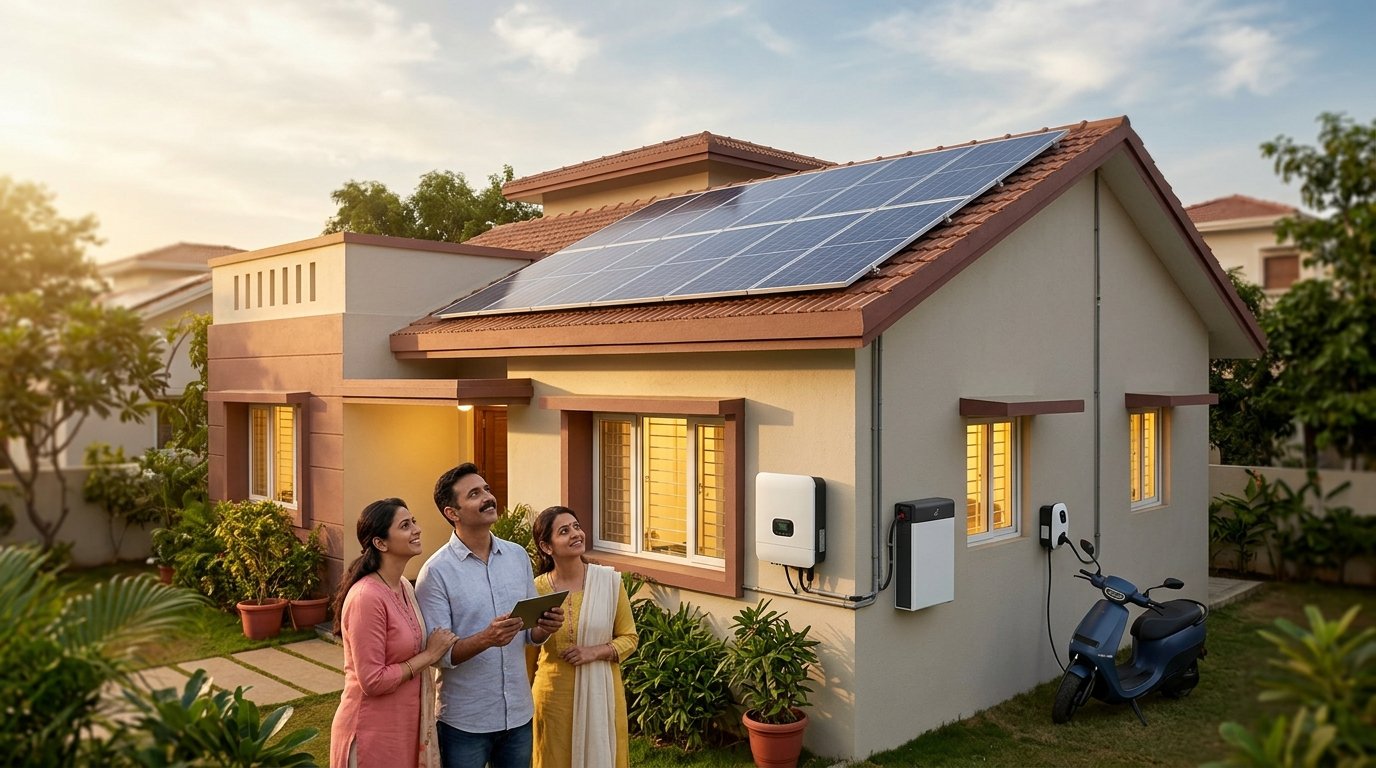
A hybrid solar system for home integrates photovoltaic solar modules, smart energy storage, and a synchronized utility grid connection into a single automated setup.
Unlike conventional on-grid setups that leave you in the dark during local load-shedding, or standalone off-grid systems that cut you off from the utility network entirely, a hybrid system dynamically orchestrates all three power sources:
- Direct Solar Powering: During daylight hours, your solar array converts sunlight into DC electricity, which the hybrid inverter converts to AC power for your active home appliances.
- Automated Battery Charging: Any surplus electricity not consumed by your home routes directly into a dedicated solar battery storage bank.
- Bilateral Grid Export: Once your battery bank reaches full capacity, additional solar generation exports to the utility grid through bidirectional net-metering, earning you electricity bill credits.
- Instantaneous Blackout Backup: When the municipal grid drops, the system isolates itself from the utility line within milliseconds and draws energy from the battery bank without equipment flickers or dropped connections.
Why Hybrid Solar Systems Deliver Superior Value
1. Drastic Utility Bill Reductions
A hybrid system maximizes your self-consumption ratio. Standard on-grid consumers must export excess daytime generation at lower feed-in tariffs and buy back expensive power during evening peak hours. With a hybrid setup, you store that daytime surplus and consume it during the evening. By relying primarily on free, self-generated electricity round the clock, homeowners commonly see their monthly utility bills drop by 75% to 90%.
2. Silent, Seamless Power Backup Without a Separate UPS
Traditional homes in Karnataka often rely on noisy diesel generators or separate, bulky lead-acid UPS units tucked under stairwells. Hybrid solar systems eliminate this redundant hardware. Because high-capacity energy storage connects directly to your central inverter, your entire home remains powered during load-shedding without manual intervention, fumes, or recurring fuel expenses.
3. Protection Against Time-of-Day Tariff Surges
Electricity boards across India are increasingly implementing time-of-day (ToD) tariff structures that charge higher rates for electricity consumed between 6:00 PM and 10:00 PM. A hybrid system lets you program your battery storage to discharge during these high-tariff windows, shielding your household from peak utility rates.
Comparing Your Options: On-Grid vs Off-Grid vs Hybrid
Choosing the right solar configuration depends on your grid stability and lifestyle requirements. To dive deeper into technical specifications, explore our comprehensive breakdown on on-grid vs off-grid vs hybrid solar setups.
System Feature | Standard On-Grid Solar | Fully Off-Grid Solar | Hybrid Solar Systems for Home |
Operates During Power Cuts? | ❌ Shuts down immediately | ✅ Yes (Full independence) | ✅ Yes (Seamless transition) |
Reduces Monthly Utility Bills? | ✅ Yes (via Net Metering) | ❌ N/A (Disconnected from grid) | ✅ Yes (Self-use + Net Metering) |
Bilateral Grid Connection? | ✅ Yes | ❌ No | ✅ Yes |
Integrated Battery Storage? | ❌ None | ✅ Required | ✅ Optimized Storage |
Backup Inverter Redundancy? | ❌ Requires separate UPS | ❌ Standalone only | ✅ Built-in Hybrid Inverter |
Best Suited For: | Urban homes with zero power cuts | Remote farmhouses without grid lines | Homes and businesses facing regular outages |
The Financial Return on Investment
Clear Payback Timelines
While a hybrid system requires a higher initial investment than a basic on-grid array due to the battery bank, it yields significant operational returns. Most residential hybrid installations reach break-even within 4 to 6 years, depending on your daily load profile, local DISCOM tariffs, and battery capacity. Considering that tier-one modules carry 25-year performance warranties, you receive roughly two decades of near-zero-cost electricity after recouping your initial investment. To calculate your specific payback timeline, consult our guide on how to calculate solar panel payback period and ROI.
Government Financial Assistance and Net-Metering
Homeowners installing solar panels for home use can leverage major government incentives under the PM Surya Ghar Muft Bijli Yojana. The scheme provides central financial assistance of up to ₹78,000 for residential rooftop systems up to 3 kW capacity. When paired with bidirectional net-metering agreements approved by your local DISCOM, these subsidies reduce your net capital expenditure and accelerate payback.
Core Components That Guarantee System Longevity
A hybrid system is only as reliable as its weakest link. Ensuring your installer procures industrial-grade equipment protects your investment over decades of continuous operation.
Advanced Lithium Battery Technology
Legacy tubular and lead-acid batteries degrade rapidly, require dangerous acid water top-ups, and offer low depth of discharge (DoD). Modern installations utilize Lithium Iron Phosphate (LiFePO4) battery chemistry. These compact, wall-mounted storage units deliver over 4,000 to 6,000 charge cycles, allow up to 90% depth of discharge without thermal damage, and require zero fluid maintenance.
Intelligent Hybrid Solar Inverter
The solar inverter serves as the central processing unit of your energy system. A premium hybrid inverter incorporates dual Maximum Power Point Trackers (MPPT) to optimize wattage yield from complex roof layouts. It also features integrated Wi-Fi data logging, allowing you to monitor real-time generation, battery reserves, and grid feed-in metrics straight from your smartphone.
High-Efficiency Solar PV Modules
Installing high-output N-Type TOPCon or monocrystalline PERC solar panels guarantees maximum wattage generation even in constrained roof footprints. These advanced modules feature superior low-light performance, ensuring your system captures ambient sunlight and charges your storage bank even during overcast monsoon days.
The Final Verdict on Going Hybrid
So, are hybrid solar systems for home worth it?
If you live in an area with a 100% reliable utility grid and zero power outages, a standard on-grid setup may suffice. However, for the vast majority of homeowners across Karnataka and coastal regions where seasonal storms, scheduled maintenance, and voltage fluctuations disrupt daily life, a hybrid setup offers unmatched long-term value. It delivers complete blackout immunity, insulates your wallet from rising power tariffs, and provides a clean, silent alternative to diesel generators.
Build Your Resilient Energy System with Mahati Enterprises
Designing a reliable hybrid setup requires professional structural engineering, precise load calculations, and meticulous electrical execution. Mahati Enterprises provides turnkey clean energy engineering across Mangaluru, Udupi, and surrounding regions.
As an empanelled, government-approved solar vendor, we handle every phase of your transition from initial 3D shading analysis and structural mounting to DISCOM net-metering approvals and central subsidy processing.
Our turnkey clean energy services include:
- Residential Solar Panel Installation: Custom rooftop solar arrays tailored for maximum household energy generation.
- Hybrid Solar Systems: High-efficiency grid-tied solar installations featuring smart battery storage.
- Solar Battery Storage: Advanced lithium storage retrofits designed to replace obsolete lead-acid banks.
- Commercial & Industrial Solar Solutions: High-capacity systems built for enterprise operational savings.
- Off-Grid Solar Systems: Standalone clean energy solutions engineered for remote properties.
- Solar Panel Maintenance & Repairs: System audits, string testing, inverter repairs, and preventive care.
Explore our side-by-side comparison on solar panel vs diesel generator: which backup makes more sense or discover why your business needs a reliable UPS with solar backup.
Contact Mahati Enterprises today to schedule a comprehensive rooftop assessment and design a solar setup built to last.