Rooftop solar has never been more affordable thanks to a government initiative that deposits real money directly into your bank account. If you have been delaying your transition to clean energy because of upfront costs, understanding the solar subsidy 2026 structure will transform your decision. Under the PM Surya Ghar Muft Bijli Yojana, homeowners across the country can drastically reduce their electricity bills while claiming generous financial assistance. For residents considering solar panel installation in Karnataka, navigating the official national portal and local DISCOM approvals like MESCOM or BESCOM is now simpler than ever. Here is your comprehensive guide to eligibility, calculation tiers, approved equipment, and how to successfully claim your rooftop solar subsidy India.
TABLE OF CONTENT
What Is PM Surya Ghar Muft Bijli Yojana?
The PM Surya Ghar Muft Bijli Yojana is a flagship central government initiative launched to accelerate green energy adoption across residential homes in India. Administered by the Ministry of New and Renewable Energy (MNRE) with an outlay of ₹75,000 crore, the scheme aims to solarise 1 crore households.
By mid-2026, the scheme has already empowered over 40 lakh homes, making it the most active rooftop solar subsidy India framework to date. The scheme not only lowers monthly utility expenses by generating up to 300 units of free electricity per month, but it also incentivizes domestic manufacturing and grid reliability.
Solar Subsidy 2026: Tiered Financial Benefits Breakdown
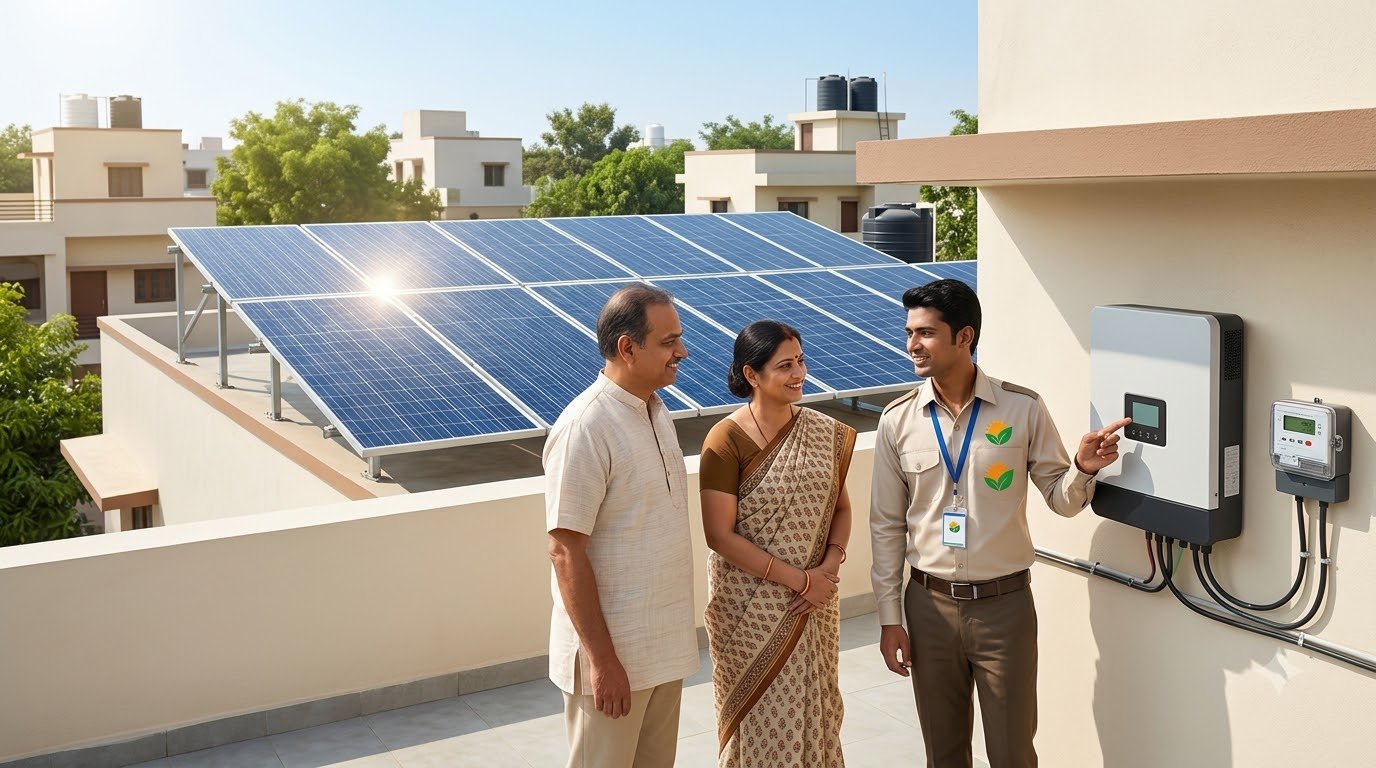
The solar subsidy 2026 structure is systematically tiered based on system capacity (kW) to ensure equitable distribution among residential consumers:
1 kW System Capacity:
₹30,000 direct financial subsidy.
2 kW System Capacity:
₹60,000 direct financial subsidy.
3 kW System or Above:
Maximum subsidy capped at ₹78,000.
Most residential households opt for a 3 kW capacity system because it generates approximately 300 units of monthly power meeting the energy needs of an average family. When evaluating the 3 kW solar system price with subsidy, the net out-of-pocket investment drops dramatically after accounting for the ₹78,000 MNRE subsidy credit.
System Capacity | Estimated Monthly Output | Financial Subsidy Amount | Ideal For |
1 kW | ~100 units | ₹30,000 | Small apartments / low consumption |
2 kW | ~200 units | ₹60,000 | 2 BHK homes / medium load |
3 kW & above | ~300+ units | ₹78,000 (Max Limit) | 3+ BHK homes / high consumption |
Who Is Eligible & Equipment Rules: Why You Need ALMM Approved Solar Panels
To qualify for assistance under the PM Surya Ghar Muft Bijli Yojana, applicants must satisfy key eligibility and equipment requirements:
Residential Connection:
The property must have a sanctioned electricity load of 10 kW or below under a residential tariff connection.
ALMM Approved Solar Panels:
The Ministry strictly mandates the installation of ALMM approved solar panels (Approved List of Models and Manufacturers). Non-compliant panels will result in automatic subsidy disqualification.
Domestic Content Requirement (DCR):
Solar cells and modules must be manufactured domestically within India to qualify for full rooftop solar subsidy India benefits.
Verifying equipment compliance before issuing a deposit to any vendor is essential. Working with an experienced local provider like Mahati Enterprises ensures that every panel and inverter deployed meets current MNRE and DISCOM mandates.
How to Apply for Solar Subsidy: Step-by-Step Instructions
Knowing how to apply for solar subsidy online prevents unnecessary paperwork delays. The process is fully integrated through the national portal:
1. Portal Registration:
Register on the official PM Surya Ghar portal by choosing your state, local DISCOM (such as MESCOM in Karnataka), consumer account number, and verified mobile number.
2. Technical Feasibility Approval:
Wait for your local electricity provider to issue technical approval for your sanctioned load.
3. Vendor Selection & Installation:
Choose a registered vendor to execute your system. If you are planning a solar panel installation in Karnataka, ensure your contractor handles both structural mounting and grid synchronisation paperwork smoothly.
4. Net Metering Application:
After system setup, submit a separate application for net meter inspection with your electricity utility.
5. Subsidy Release:
Upon net meter commissioning, upload the commissioning certificate and bank account details on the portal to receive your solar subsidy 2026 credit directly via Direct Benefit Transfer (DBT).
Processing Timelines & Escalation Paths for Delayed Subsidies
While the official mandate promises DBT release within 30 working days from commissioning, actual execution varies by state utility. In states with high application volumes, processing can extend to 3 to 5 months.
If you are wondering how to apply for solar subsidy claim escalations when your funds are delayed past 90 days, follow this sequential path:
Level 1:
File a ticket with your local DISCOM grievance portal (e.g., MESCOM consumer helpline).
Level 2:
Submit an official inquiry through the MNRE national solar portal grievance tracking module.
Level 3:
Escalate directly via CPGRAMS (Centralized Public Grievance Redress and Monitoring System) for central ministry intervention.
Common Errors That Delay Your Rooftop Solar Subsidy India
Avoiding frequent pitfalls ensures your application moves swiftly from approval to disbursement:
Inaccurate Benchmark Pricing Assumptions:
The solar subsidy 2026 is calculated using MNRE benchmark rates, not quoted installer fees. Higher installer quotes do not increase your subsidy payout.
Installing Non-Compliant Equipment:
Failing to insist on ALMM approved solar panels is the single largest cause for application rejection.
Mismatched Documentation:
Ensure consumer names on electricity bills match the bank account details uploaded for DBT transfer.
Miscalculating the 3 kW Solar System Price with Subsidy:
Homeowners often overlook net-metering fees, structural extensions, or battery additions when budgeting for their total system cost.
Why Going Solar in 2026 Makes Financial Sense
In addition to direct upfront grants under the PM Surya Ghar Muft Bijli Yojana, beneficiaries can access collateral-free solar loans at concessional interest rates. When evaluating the 3 kW solar system price with subsidy, the payback period for most residential installations in Karnataka has compressed to under 3 to 4 years, yielding free electricity for the remaining 20+ years of panel lifespan.
Whether you require a grid-tied setup or are considering solar panel installation in Karnataka to eliminate rising utility tariffs, combining government subsidies with concessional financing offers unmatched return on investment.
Streamline Your Solar Transition
Navigating portal registrations, net metering paperwork, and equipment selection requires a trusted local solar partner. At Mahati Enterprises, we provide end-to-end support for Indian homeowners looking to maximize their solar subsidy 2026 benefits.
Our comprehensive product and service offerings include:
Residential Solar Panel Installation:
Complete rooftop turn-key setups using ALMM approved solar panels.
Hybrid Solar Systems & Solar Battery Storage:
Battery-backed solar solutions that guarantee uninterrupted power during grid outages.
Commercial & Industrial Solar Solutions:
High-capacity installations tailored for business energy needs.
Off-Grid Solar Systems & Solar Panel Maintenance & Repairs:
Comprehensive upkeep and repair services to ensure maximum system efficiency year-round.
Ready to lower your electricity bills with the PM Surya Ghar Muft Bijli Yojana? Reach out for a free site assessment and step-by-step subsidy assistance!